
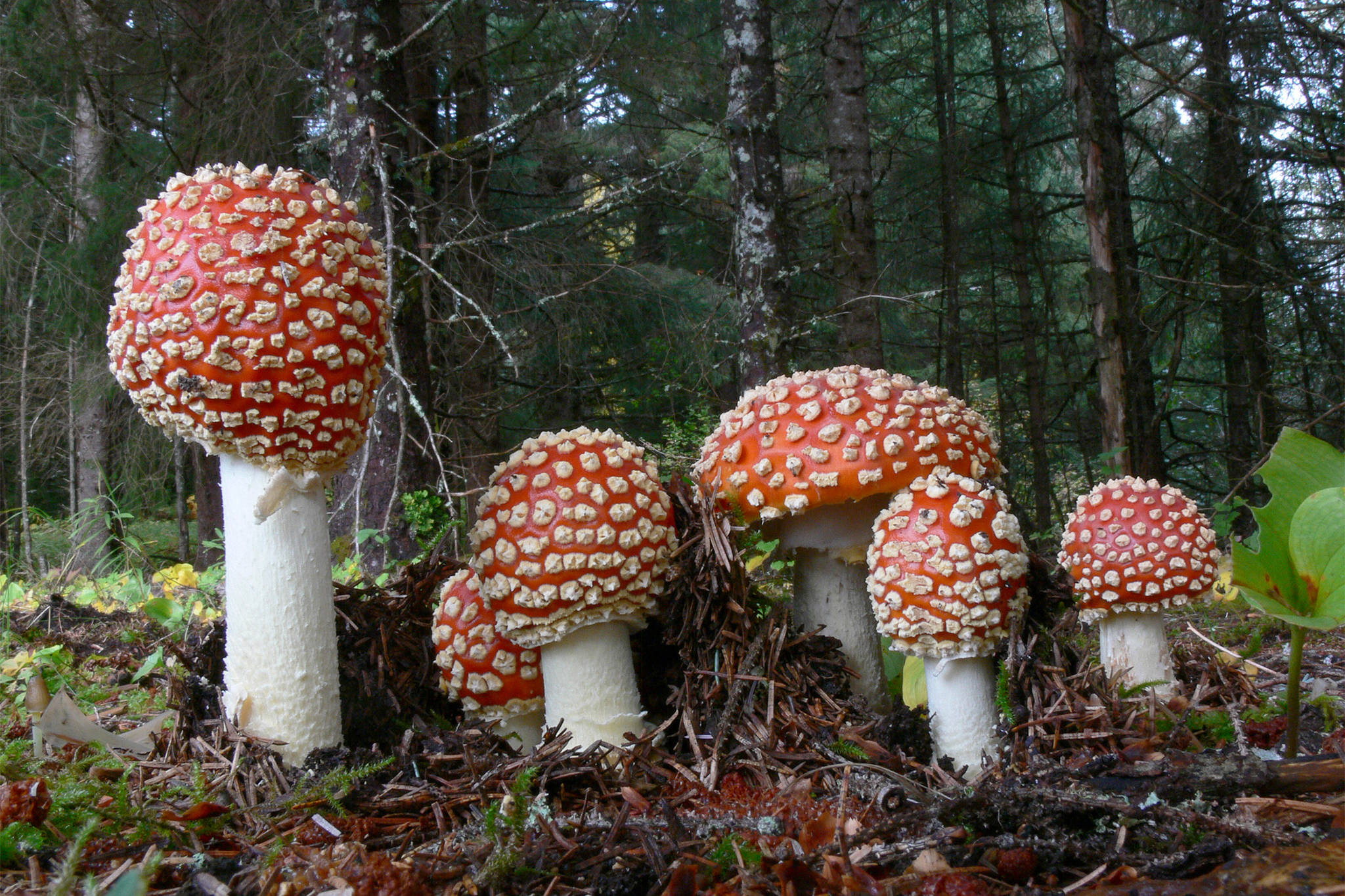
Amanita muscaria, widely recognized for its iconic red cap with white spots, has fascinated scientists and ethnobotanists for decades. Unlike the more commonly studied psychedelic mushrooms that contain psilocybin, Amanita muscaria’s psychoactive effects stem primarily from two compounds: muscimol and amanita pulveribotenic acid. Research into these substances reveals a complex pharmacology that distinguishes the fly agaric from other psychoactive fungi, making it a unique subject in the study of natural neuroactive agents.
The chemical profile of Amanita muscaria is centered on muscimol, a potent GABA_A receptor agonist, and ibotenic acid, a neurotoxin that also serves as a prodrug to muscimol through decarboxylation. Muscimol’s action on the brain primarily results in sedative, dissociative, and hallucinogenic effects, whereas ibotenic acid is associated with excitotoxicity and unpleasant side effects such as nausea and muscle spasms. Studies have shown that drying or heating the mushroom helps convert ibotenic acid into muscimol, thereby reducing toxicity and enhancing psychoactivity.
Pharmacological research on muscimol has provided insights into its interaction with the central nervous system. Acting similarly to the neurotransmitter GABA, muscimol inhibits neural activity, which accounts for its sedative and dissociative properties. This mechanism differs significantly from classic psychedelics like LSD or psilocybin, which primarily affect serotonin receptors. This distinction explains why the experiences induced by Amanita muscaria can be more dreamlike or sedative rather than the vivid, colorful hallucinations typical of serotonin-based psychedelics.
Toxicological studies highlight the risks and safety concerns related to Amanita muscaria consumption. While muscimol is less toxic than ibotenic acid, the latter can cause severe neurotoxic effects if ingested in high doses. Symptoms of poisoning include confusion, seizures, vomiting, and even coma in extreme cases. However, the overall mortality rate is low, and fatalities are rare. Research suggests that traditional preparation methods—such as drying or boiling—are effective in mitigating ibotenic acid toxicity, making the mushroom safer for consumption when properly processed.
Beyond its psychoactive effects, scientific interest in Amanita muscaria extends to its ecological role and ethnomycological significance. It forms symbiotic mycorrhizal relationships with various tree species, playing a crucial part in forest ecosystems by aiding nutrient exchange. Anthropological studies have traced its use in indigenous cultures, particularly among Siberian shamans, who used the mushroom in ritualistic and medicinal contexts. Modern research increasingly explores how these traditional practices might inform safe usage and potential therapeutic applications.
In summary, Amanita muscaria presents a fascinating subject at the crossroads of neuropharmacology, toxicology, and ethnobotany. Scientific research underscores the mushroom’s distinct pharmacological profile driven by muscimol and ibotenic acid and highlights both its potential psychoactive benefits and risks. As interest in natural psychoactive substances grows, a deeper understanding of Amanita muscaria’s chemistry and cultural history is essential to harness its properties responsibly and safely.